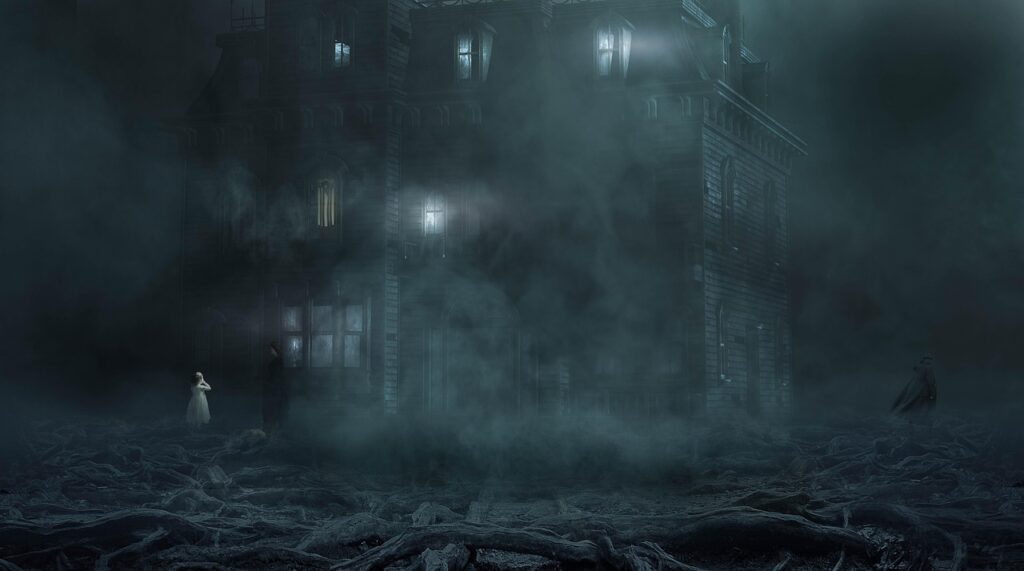
The realtor warned Emma the old farmhouse had “a strong personality,” but she took the deal anyway. She needed a place—any place—after the breakup. The first night was calm, too calm. No creaking floors, no howling wind. Just… quiet. A quiet that felt like it was listening.
On the second night, she woke to the faint sound of a chair sliding across the kitchen floor. She crept out, heart pounding, but found all the chairs perfectly tucked in. She convinced herself it was her nerves—until the third night, when she found fresh muddy footprints leading from the back door to her bedroom. Human footprints. Bare feet. Larger than hers.
She checked the locks—they were still bolted. Yet every morning brought new evidence: wet handprints on the hallway walls, the smell of pine and damp earth lingering in the air, and soft breathing behind her bedroom door when no one was there. The house wasn’t settling. It was remembering.
One night, she woke paralyzed, unable to move, staring at the dark shape crouched beside her bed. She couldn’t see its face, but she heard it inhale—a long, shuddering breath—as if smelling her thoughts. Then it whispered, “You came back.”
Emma had never been there before. But the house insisted she had. And every night, the presence grew more certain, more familiar, more possessive. Now, she sleeps with the lights on—not because it keeps the thing away, but because in the darkness, she can feel its fingers brush her cheek, trying to remind her of a past that doesn’t exist. Or one she forced herself to forget.